Berber area rugs represent one of the world’s oldest continuous weaving traditions, with archaeological evidence tracing North African tribal looms back to 622 AD. Today, authentic 100% wool Berber rugs are valued not just as decor, but as appreciating assets, with premium Beni Ourain and Azilal pieces seeing a 15-20% increase in market value over the last three years (Morocco World News, 2025).
Choosing the right area rug can be a complex decision. However, Berber area rugs stand out for their exceptional blend of rich history, unique weaving techniques, and modern durability. Originally crafted by the indigenous Amazigh tribes of the Maghreb, these rugs have evolved from functional tribal bedding into the “gold standard” of minimalist luxury for contemporary homes.
Key Takeaways
- Dual Identity: “Berber” refers both to authentic hand-knotted Moroccan tribal rugs and modern industrial loop-pile carpets.
- Material Matters: Premium Berber rugs use 100% high-altitude sheep’s wool, naturally rich in lanolin for built-in stain resistance.
- Investment Value: Authentic Moroccan pieces are considered “functional art” and often increase in value as they age.
- Sustainability: Hand-woven Berber rugs are 100% biodegradable and produced using zero-electricity manual looms.
1. What is a Berber Rug? The Heritage of the Amazigh
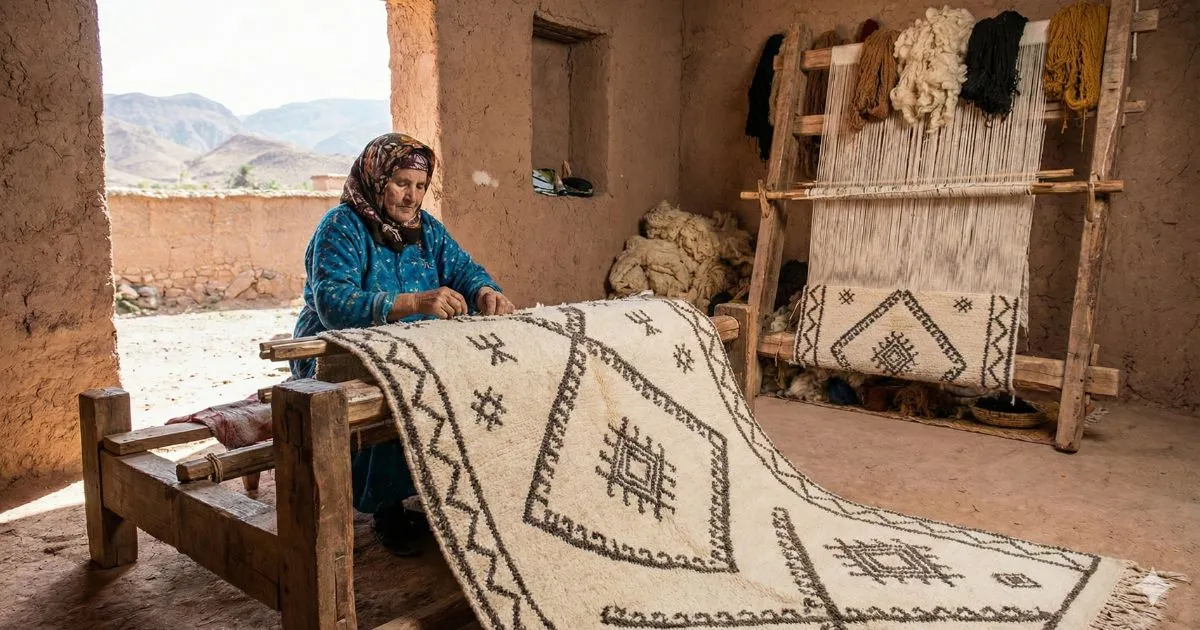
The term “Berber” is derived from the name given to the indigenous people of North Africa, who call themselves the Amazigh (meaning “free people”). For over a millennium, these communities have lived in the rugged Atlas Mountains, where the harsh climate necessitated the creation of thick, insulating textiles.
Who Are the Berber People?
The Berber people are a group of diverse tribes (such as the Beni Ourain, Azilal, and Boujaad) spread across Morocco, Algeria, and Tunisia. Each tribe has developed a distinct visual language, using weaving as a form of non-verbal storytelling.
Ancient Weaving Traditions
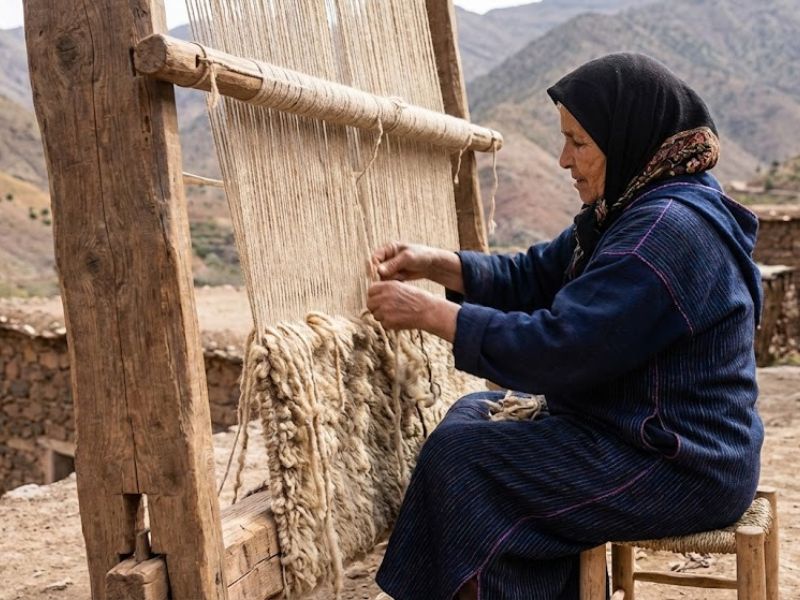
Weaving is traditionally a female-led craft. Berber women use vertical hand-looms to create intricate patterns that represent fertility, protection, and the natural world. Unlike the rigid symmetry of Persian rugs, Berber designs are often asymmetrical, reflecting the organic flow of life and the weaver’s personal journey.
2. Authentic Rugs vs. Modern Berber Carpets
One of the most common points of confusion for buyers is the difference between an authentic Moroccan Berber rug and modern Berber carpet.
Authentic Moroccan Berber Rugs
- Construction: Hand-knotted over several months.
- Material: 100% raw sheep’s wool.
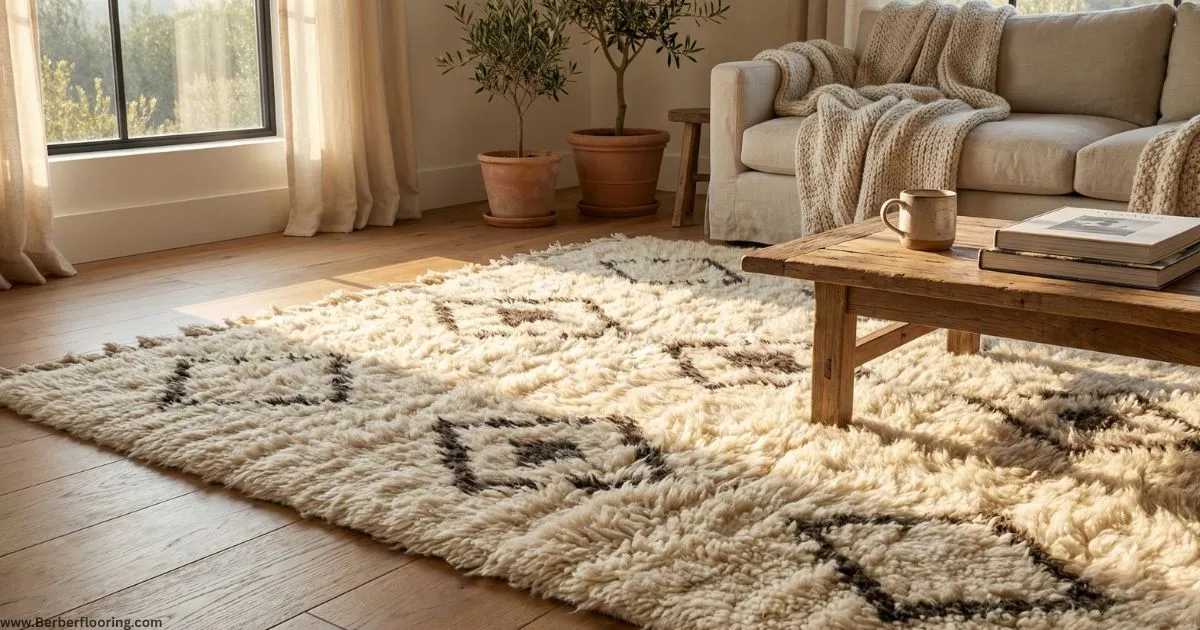
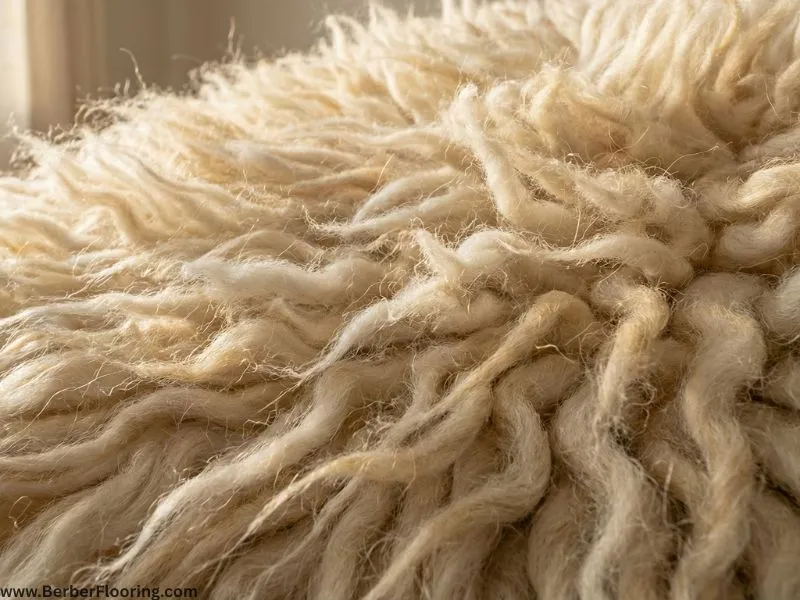
- Design: Unique tribal patterns, often with shaggy piles (like Beni Ourain).
- Backing: No synthetic backing; the knots are visible on the underside.
Modern Loop-Pile Berber Carpets
- Construction: Machine-made or tufted.
- Material: Often a blend of wool and synthetic fibers (nylon/olefin).
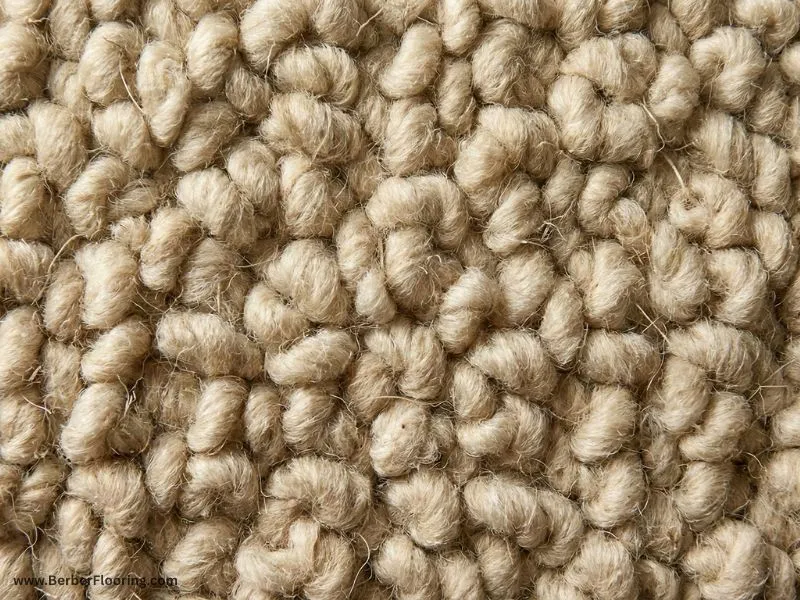
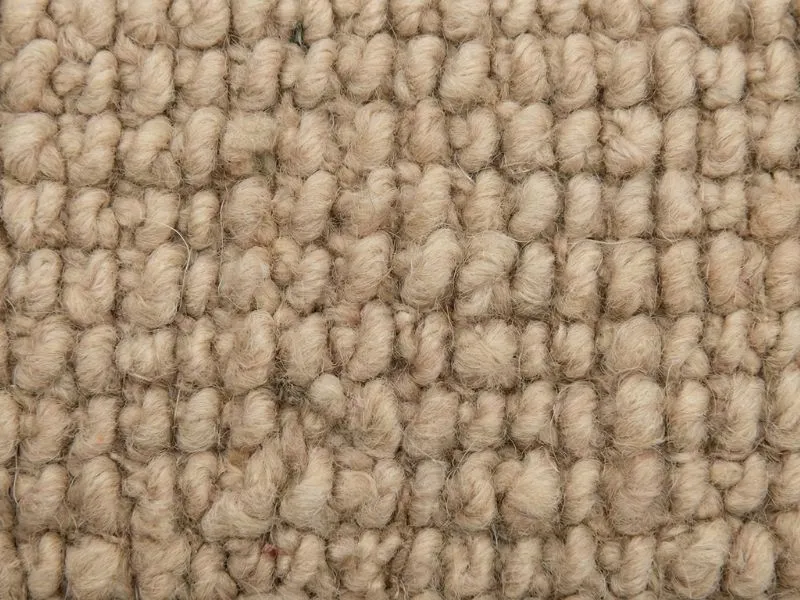
- Design: Uniform “flecked” appearance with a tight loop construction.
- Benefit: Exceptional for high-traffic offices and basement installations due to its low profile and snag resistance.
3. Popular Types of Berber Area Rugs
If you are looking for an authentic piece, the “type” is usually defined by the tribe of origin.
| Rug Type | Visual Style | Best For |
|---|---|---|
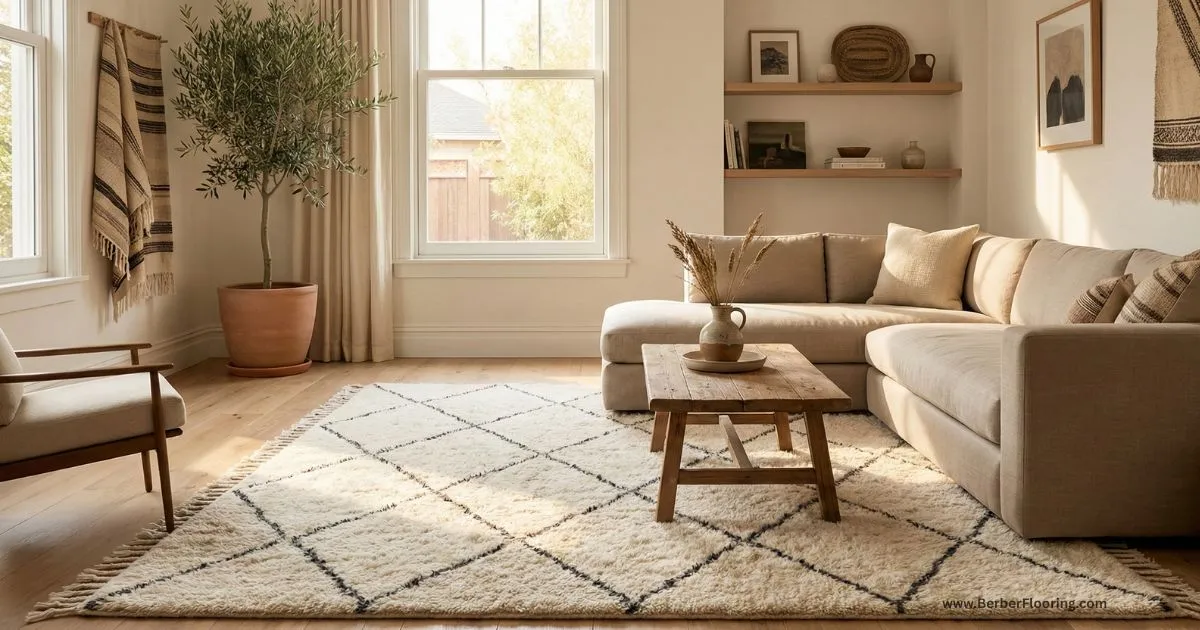
| Beni Ourain | Minimalist ivory/black geometric lines. | Modern, Scandi, or Mid-Century homes. |
| Azilal | Vibrant, colorful patterns on white wool. | Eclectic and Bohemian spaces. |
| Boujaad | Warm reds, pinks, and oranges with complex motifs. | Adding warmth to large living rooms. |
| Kilim | Flat-weave, no pile, highly portable. | High-traffic entryways and dining rooms. |
Beni Ourain: Minimalist Elegance
Beni Ourain rugs are perhaps the most iconic. Made from the wool of ancient breeds of sheep in the Middle Atlas mountains, they feature a signature cream base with thin charcoal-gray geometric lines. Their plush, high-pile texture makes them the softest option for bedrooms.
4. Why Premium 100% Wool Makes a Difference
Whether you choose a shaggy tribal rug or a tight loop-pile carpet, wool is the superior material. Synthetic imitations may look similar initially, but they lack the structural integrity of natural protein fibers.
Natural Stain and Soil Resistance
Wool fibers contain a natural wax called lanolin. This creates a microscopic barrier that prevents spills from penetrating the core of the fiber. In independent testing, 100% wool rugs were found to release soil 30% more effectively than nylon counterparts during standard vacuuming.
Exceptional Durability and Longevity
5. How to Choose the Perfect Rug for Your Space
Selecting a Berber rug requires balancing aesthetics with the functional needs of your room.
Size and Room Placement
Getting the right size is the most critical step in rug selection. A rug that is too small “floats” in the room, making the space feel disjointed.
- Living Room: Ensure at least the front legs of all seating rest on the rug.
- Bedroom: A large 8x10 or 9x12 placed horizontally under the bed is the most common luxury layout.
- Dining Room: The rug should extend at least 24 inches beyond the table on all sides to allow chairs to move freely.
Authenticating Real vs. Imitation
- The Burn Test: Snip a tiny piece of fiber and light it. Wool smells like burning hair and turns to ash; synthetic fibers smell like plastic and melt into a hard bead.
- The Backing: Authentic rugs have no “glue” or secondary canvas backing. The design on the front should be mirrored on the back.
- The Fringe: In authentic rugs, the fringe is an extension of the warp threads (part of the rug’s structure), not sewn on afterward.
6. Caring for Your Berber Rug
A well-maintained Berber rug can last 50+ years.
Routine Maintenance
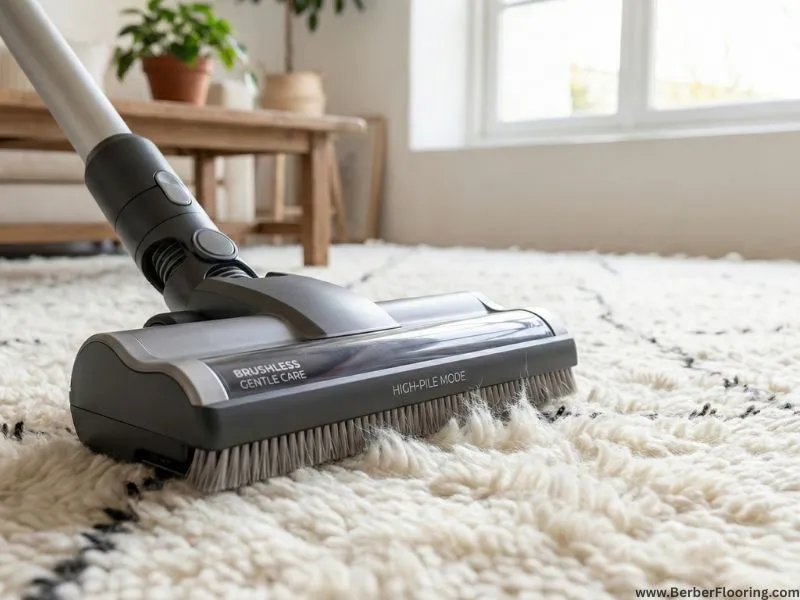
- Vacuuming: Use a high-quality vacuum without a beater bar for shaggy rugs. For loop-pile carpets, a standard vacuum is fine, but avoid high-suction settings that can cause “fuzzing.”
- Spot Cleaning: Never rub a spill. Blot with a clean white cloth using lukewarm water and a drop of pH-neutral wool detergent.
- Rotation: Rotate your rug 180 degrees every 6 months to ensure even wear and prevent sun-fading in specific areas.
Professional Cleaning
We recommend professional “submersion” cleaning every 2-3 years. Avoid standard steam cleaning (hot water extraction) for 100% wool rugs, as extreme heat can shrink the fibers and strip away natural lanolin.
FAQ: Frequently Asked Questions
Are Berber rugs hard to clean?
No. Thanks to the natural lanolin in wool, they are actually easier to clean than synthetic rugs. However, their loop or shaggy structure requires specific vacuuming techniques (no beater bar).
Do Berber rugs shed?
Authentic high-pile wool rugs will shed 'fuzz' for the first 3-6 months. This is normal and is simply the release of loose fibers from the hand-spinning process. Regular gentle vacuuming will resolve this.
Why are they called Berber rugs?
They are named after the Berber (Amazigh) tribes of North Africa, who have been weaving these specific styles for over a thousand years.
Can I use a Berber rug in a high-traffic hallway?
Yes, but we recommend a flat-weave Kilim or a low-pile vintage Berber rug for hallways. High-pile Beni Ourain rugs are better suited for low-traffic areas like bedrooms.
Conclusion: Bringing Moroccan Charm into Your Home Investing in a Berber area rug is an investment in global artistry. Whether you prefer the industrial durability of a modern loop-pile or the soulful, shaggy comfort of a hand-knotted Beni Ourain, these rugs offer a timeless aesthetic that transcends fleeting trends. By choosing 100% wool and authentic craftsmanship, you ensure a piece that will bring warmth and character to your home for decades to come.