A high-quality Moroccan Berber rug is a lifelong investment. Because these rugs are made from 100% natural wool, they require specific care to maintain their plush texture and vibrant colors.
Unlike synthetic carpets, wool is a living, breathing protein fiber. It contains natural lanolin, which provides a microscopic shield against stains and soil. However, improper cleaning techniques can strip this protective layer, leading to premature aging and fiber breakage. This guide outlines the professional-grade maintenance routine used by collectors and curators to keep Berber rugs pristine for decades.
1. Routine Care: The Foundation of Longevity
The Golden Rule of Vacuuming
The most common cause of damage to a Moroccan rug is improper vacuuming.
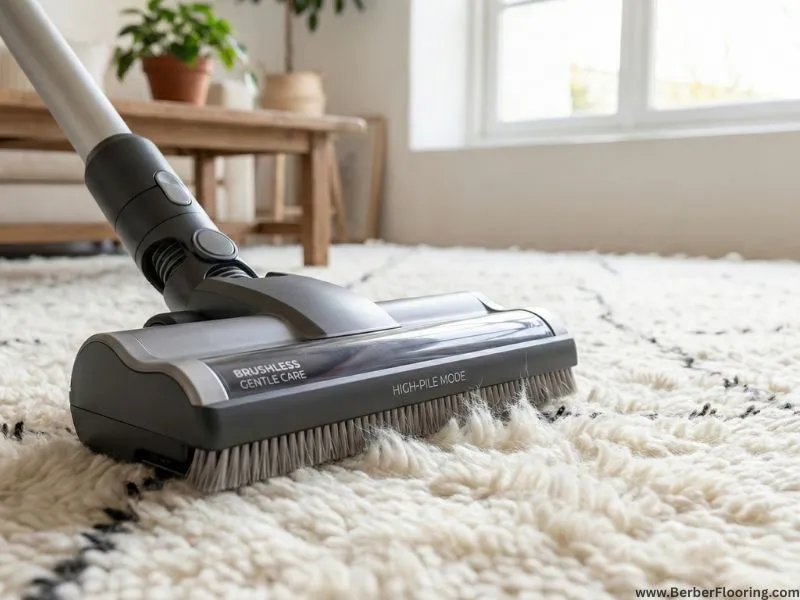
- Never Use a Beater Bar: High-speed rotating brushes (beater bars) are designed for synthetic loop carpets, but they are destructive to hand-knotted wool. They can pull the delicate fibers, causing excessive shedding and eventually untying the knots.
- Suction Only: Use a vacuum with a suction-only setting or a brushless upholstery attachment. Move the vacuum in the direction of the pile, not against it.
- Frequency: Vacuum at least once a week in high-traffic areas, and once every two weeks in lower-traffic zones like bedrooms.
The “Moroccan Shake”
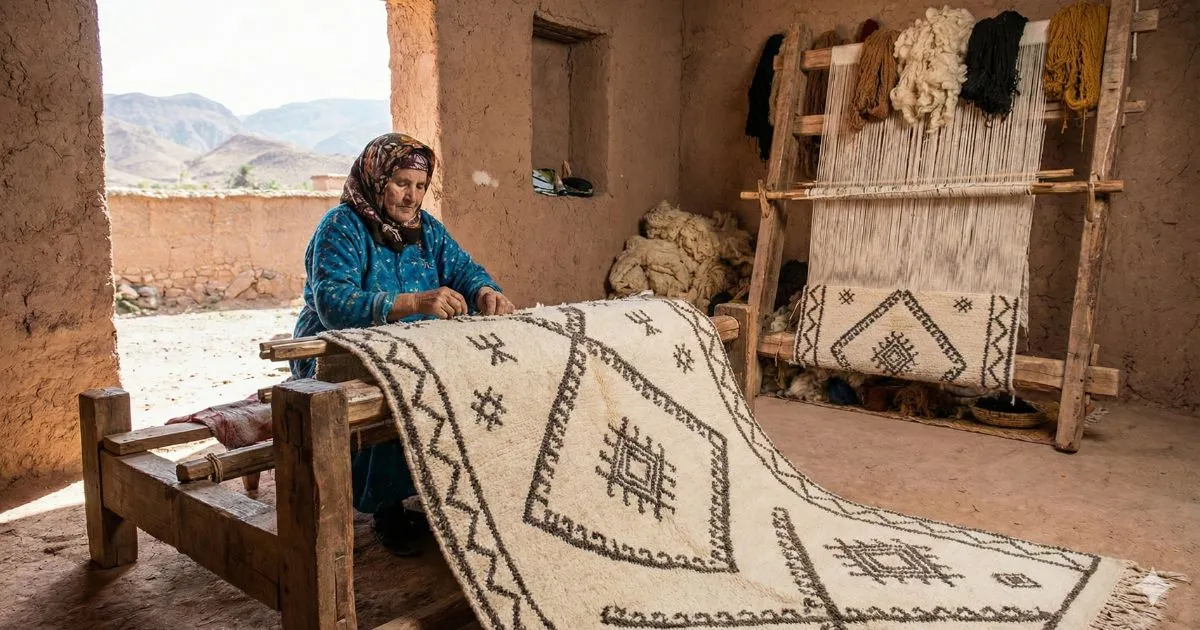
Historically, Berber tribes cleaned their rugs by shaking them out in the crisp mountain air. If your rug is small enough, take it outside once a month and give it a vigorous shake. This releases deep-seated grit and sand that vacuums often miss—grit that can act like tiny sandpaper, cutting the wool fibers from the inside out.
2. Managing Shedding and Sprouting
Initial Shedding
If your rug is new, don’t panic if you see “fuzz” on the surface. Hand-spun wool contains loose fibers that naturally work their way to the surface during the first 3-6 months of use. This is a sign of an authentic, natural product. Regular, gentle vacuuming will resolve this over time.
“Sprouting”
Occasionally, a single strand of wool may grow longer than the rest of the pile. This is called “sprouting.” Never pull the thread. Simply use a sharp pair of scissors to trim the strand level with the surrounding pile.
3. Stain Removal: The Expert Protocol
Accidents happen, but because wool is naturally hydrophobic (water-repellent), you usually have a few minutes to act before a spill becomes a permanent stain.
The Blotting Technique
- Act Fast: Blot the spill immediately with a clean, white, dry cotton cloth or paper towel.
- Never Rub: Rubbing pushes the liquid deeper into the fiber core and can distort the “twist” of the wool.
- Use Lukewarm Water: For most water-based spills (coffee, juice), use a small amount of lukewarm water and continue blotting.
pH-Neutral Cleaning
If water isn’t enough, use a tiny drop of pH-neutral wool detergent (like Eucalan or a dedicated wool wash). Harsh chemicals, bleach, or high-alkaline cleaners will strip the lanolin and can cause “dye bleed,” where the darker patterns run into the cream background.
4. Professional Cleaning: When and Why
While routine care keeps the surface clean, we recommend a Professional Submersion Wash every 3 to 5 years.
Why Avoid Steam Cleaning?
Most “carpet cleaning” services use hot water extraction (steam cleaning). This is excellent for synthetic carpets but can be disastrous for Moroccan rugs. High heat can shrink the wool and warp the rug’s foundation, causing it to lose its shape.
The Submersion Process
A true rug specialist will submerge the rug in a specialized wash pool, using cool water and gentle agitation to remove 100% of the embedded grit. This process also re-hydrates the wool fibers, restoring their natural luster and bounce.
FAQ
What is a Berber rug?
A Berber rug comes from the indigenous tribes of North Africa. It’s known for its unique hand-knotted or looped piles and traditional artisanal making. These rugs are primarily made from sheep's wool and are valued for their exceptional durability.
How often should I vacuum my Moroccan Berber rug?
Vacuum your Moroccan Berber rug weekly to prevent dirt and abrasive debris from settling into the base of the fibers. Always use a vacuum with a soft setting and a brushless attachment (no beater bar) to protect the delicate wool.
Can I use any cleaning product on my Berber area rug?
No. Harsh chemicals like bleach or ammonia will strip the natural lanolin from the wool, making it brittle and prone to staining. Only use pH-neutral mild cleaners specifically formulated for wool.
How do I remove stains from my Berber Moroccan rug?
Act fast! Blot spills immediately with a clean, white dry cloth—never rub or scrub, as this damages the fiber structure. For stubborn stains, use a professional wool-safe solution or consult a specialist.
Can I deep clean my Berber Moroccan rug at home?
While you can perform light surface cleaning at home with a mild solution and soft brush, we recommend professional submersion cleaning every 2-3 years for a true deep clean that preserves the rug's integrity.
How can I prevent shedding and loose fibers on my Berber area rug?
Shedding is normal for new wool rugs. To minimize it, vacuum gently and regularly. Using a high-quality rug pad also helps by reducing internal friction and preventing fiber breakage.
What are the benefits of professional cleaning services for my Moroccan Berber rug?
Professional cleaners use specialized equipment to remove deeply embedded grit that standard vacuums can't reach. They also help restore the wool's natural luster and ensure the rug is dried properly to prevent mildew.