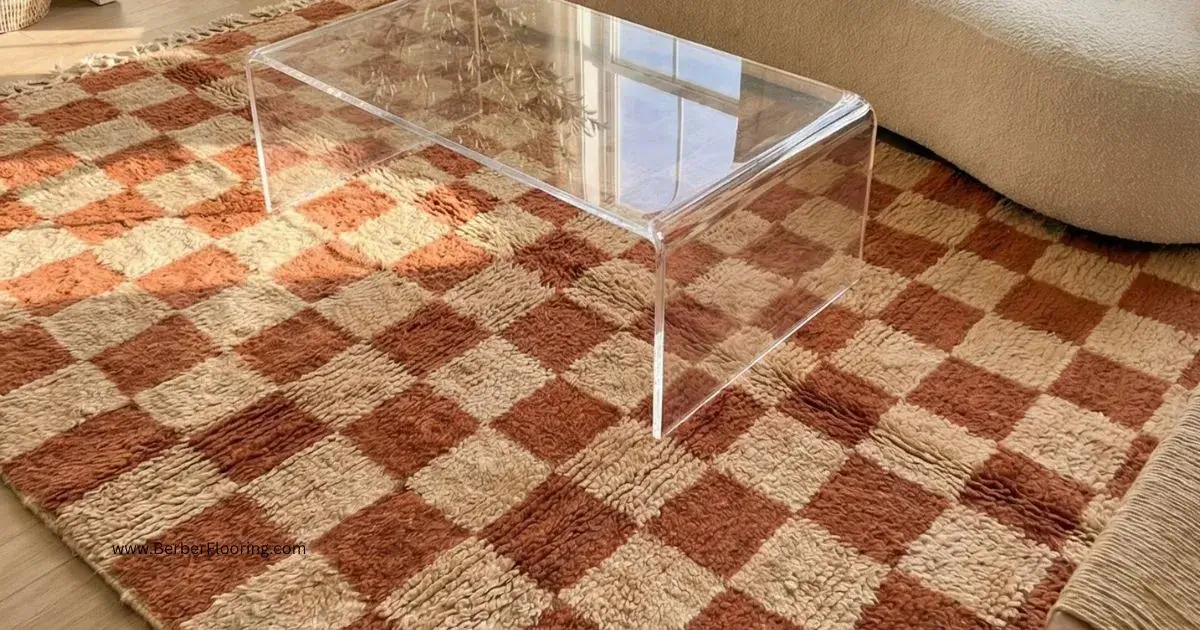
Navigating the Moroccan rug market in 2026 requires a discerning eye, as global demand for ’tribal’ aesthetics has led to a 40% increase in synthetic imitations (Global Artisanal Report, 2025). For the serious collector or homeowner, the difference between a machine-made ‘Berber-style’ carpet and an authentic hand-knotted masterpiece is not just in the price, but in the long-term investment value and structural integrity.
Shopping for an authentic Moroccan Berber rug is an exercise in cultural appreciation and quality control. Whether you are sourcing from a high-end gallery in Marrakech or a curated shop on Etsy, this guide provides the technical framework needed to identify true artisanal excellence.
Key Takeaways
Fiber Identification: Authentic rugs use 100% ‘Live’ wool (shorn from live sheep), which retains high lanolin levels.
Price Benchmarking: Expect to pay between $25 and $65 per square foot for contemporary artisan-grade pieces in 2026.
Ethical Sourcing: Prioritize sellers who provide direct-to-weaver transparency or work with recognized Moroccan cooperatives.
Structural Signs: Real rugs are never perfectly symmetrical; slight ‘wobbles’ in the design are a hallmark of human hand-knotting.
1. The Three Tiers of Berber Rugs
Not all “authentic” rugs are created equal. Understanding the market tiers will help you align your budget with your expectations.
Tier 1: Museum-Quality Vintage (Pre-1970)
These are rare pieces woven for personal tribal use, not for export. They often feature faded natural dyes (saffron, indigo, poppy) and exceptionally soft, aged wool. These are considered appreciating assets.
Price Range: $2,000 – $15,000+
Tier 2: Contemporary Artisan (Hand-Knotted)
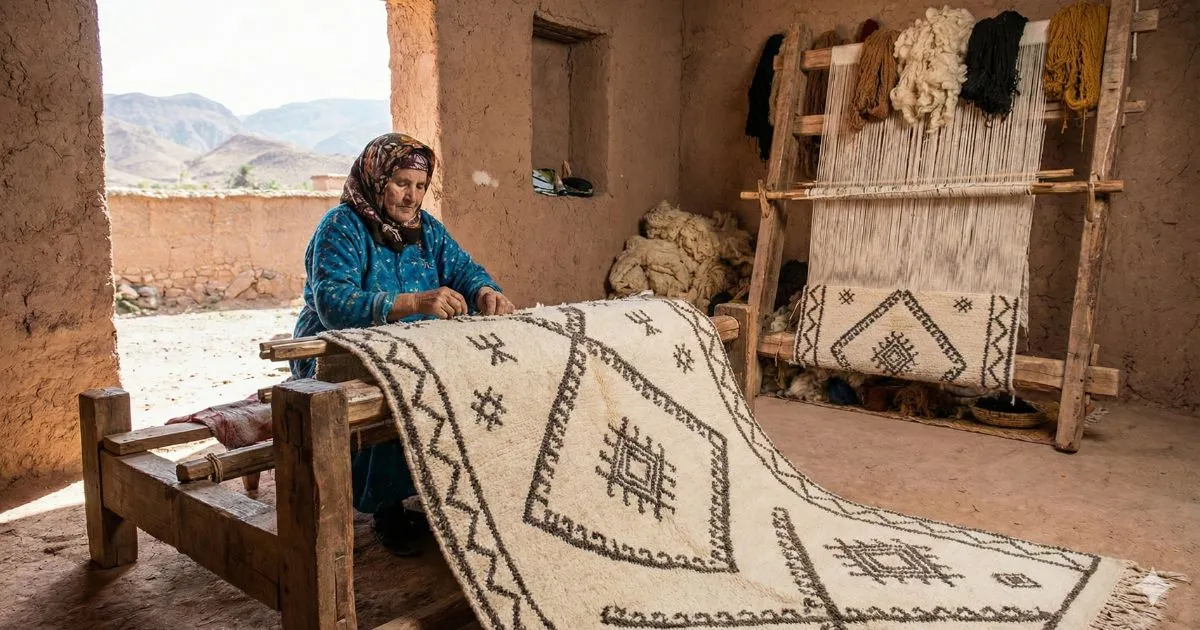
Woven today using traditional methods. These rugs offer the iconic “Beni Ourain” or “Azilal” look but are brand new. They are durable, clean, and can be custom-sized to fit modern rooms.
Price Range: $800 – $4,000
Tier 3: Commercial “Berber-Style” (Machine-Made)
These are industrial carpets made in factories (often in Turkey or Belgium). While they use the “checkerboard” or “diamond” patterns, they use synthetic backings and chemical dyes.
Price Range: $100 – $600 (Avoid these if seeking investment value).
2. The Anatomy of a High-Quality Rug
When inspecting a rug (digitally or in person), look for these three technical markers of quality.
The “Berber Knot” Density
Flip the rug over. You should see individual, slightly irregular knots. A high-quality wool Berber rug typically has a knot density that allows it to be flexible. If the rug feels stiff or has a hard plastic-like backing, it is machine-made.
Wool Grade: “Live” vs. “Dead” Wool
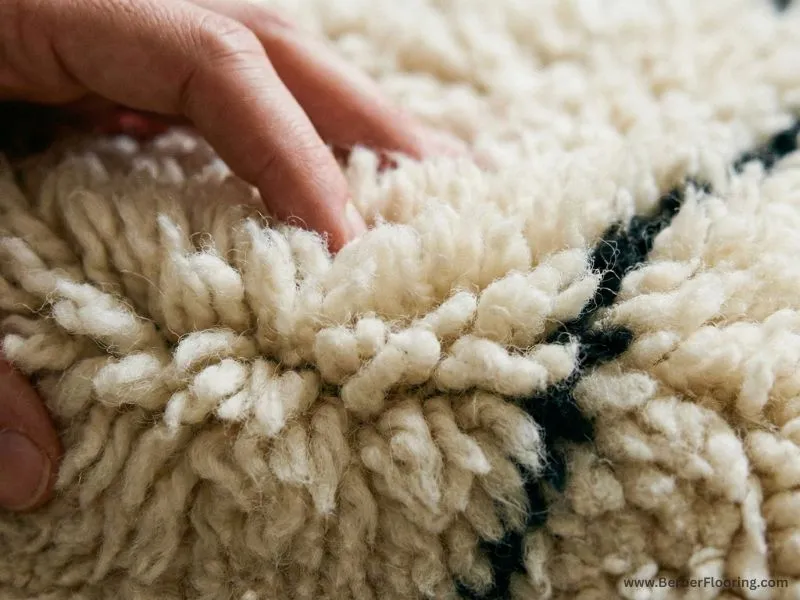
Live Wool: Shorn from a living sheep. It is supple, soft, and glows with natural lanolin.
Dead Wool: Pulled from hides in tanneries. It feels brittle, dry, and lacks the natural stain-resistance of live wool.Close-up view of the thick, plush wool pile texture of an authentic Moroccan shag rug.Figure 1: High-quality live wool has a natural luster that reflects light softly.
Natural vs. Synthetic Dyes
Rub a damp white cloth on a colored section of the rug. If the color transfers, it is a low-quality synthetic dye. Authentic natural dyes (indigo, henna, pomegranate) are “colorfast” and will develop a beautiful patina over decades rather than fading harshly.
3. The Ethical Buyer’s Checklist
In 2026, where your money goes matters as much as what you buy.
Direct Sourcing: Does the seller name the region or tribe (e.g., Middle Atlas, Azilal, Ourika)?
Fair Wage Transparency: Does the seller contribute back to the weaving cooperatives? (Many Etsy sellers, like BerberFlooring, work directly with families in the mountains).
Material Honesty: Is the seller transparent about wool-synthetic blends? (Commercial “Berber carpets” often hide 20% polyester in the base).
4. 2026 Price Transparency Guide
To avoid overpaying, use these 2026 benchmarks for a standard 8x10 (80 sq. ft.) rug:
Rug Type
Material
Estimated 2026 Price
New Beni Ourain
100% Premium Wool
$1,800 - $2,800
New Azilal
Wool + Cotton base
$1,200 - $2,200
Vintage Boujaad
Aged Wool / Natural Dyes
$3,500 - $6,000
Commercial Synthetic
Polypropylene
$250 - $450
FAQ: Buying Berber Rugs
Is Etsy a safe place to buy authentic rugs?
Yes, provided you vet the seller. Look for shops with high review counts that show photos of the actual weaving process. Many authentic Moroccan families now sell directly on Etsy to bypass expensive urban galleries.
Should I buy a 'washed' or 'unwashed' rug?
Most modern artisan rugs are 'washed' once to soften the wool and remove loose fibers. If a rug smells strongly of sheep, it may be 'unwashed,' which some collectors prefer for its extreme authenticity, but most homeowners find too pungent for indoor use.
Does a custom size lower the value?
No. For contemporary artisan rugs (Tier 2), custom sizing is a standard service. It ensures the rug fits your 2026 room dimensions perfectly without awkward gaps.
Conclusion: Making a Confident Investment
Buying an authentic Berber rug is a journey into the heart of Moroccan culture. By prioritizing 100% live wool, verifying hand-knotted construction, and insisting on sourcing transparency, you aren’t just buying a rug—you are preserving a 1,000-year-old craft.